A recent BBC News report has brought children’s screen time back into the conversation, and it’s an important one for schools as well as families. Screens are part of everyday life, including in classrooms, so it makes sense to ask not just how much children use them, but what those experiences mean for their learning and wellbeing.
There is plenty to value about technology in primary education. A well-chosen video can bring a topic to life, an interactive resource can help explain a tricky concept, and digital tools can make planning and teaching more manageable. Used thoughtfully, they can open experiences that might otherwise be out of reach.
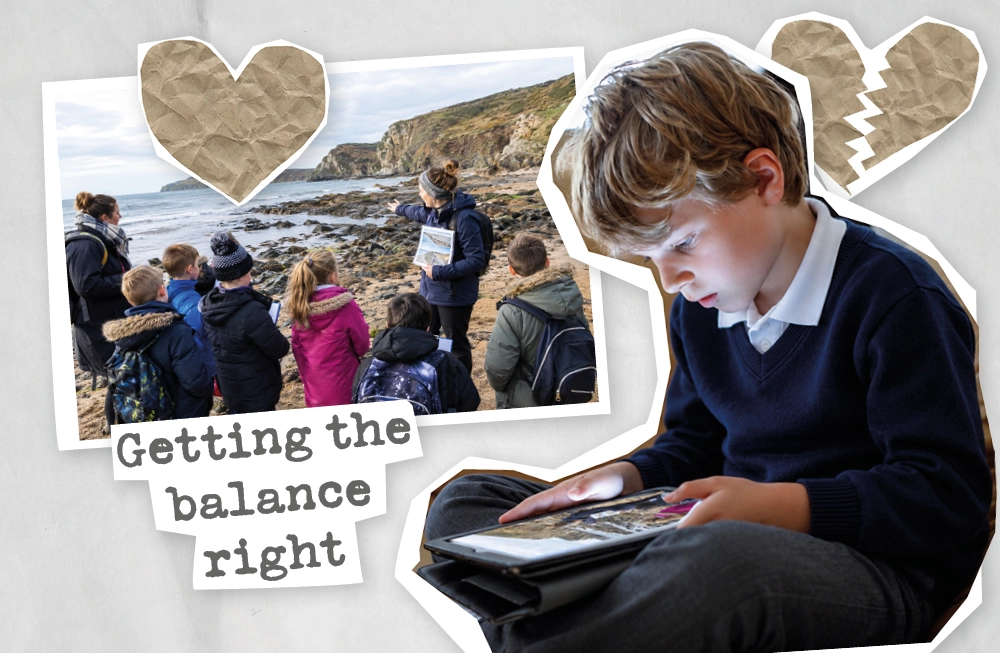
I have one question: are we getting the balance right?
It’s easy to see why digital resources appeal, but young children also need to learn by doing. They need chances to touch, make, explore, investigate, talk and move. They need to work alongside others, make mistakes and discover that sometimes the best way forward is to have another go.
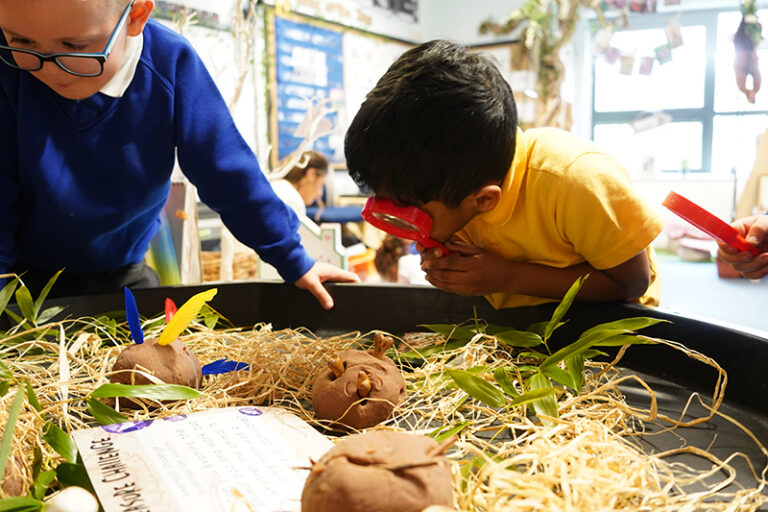
Watching a science experiment is useful, but carrying it out brings a different kind of understanding. A photograph of a historical artefact can spark interest, but handling an object and looking closely at its details can prompt new questions. And there’s nothing quite like building a structure, seeing it topple and working out together how to make it stronger.
Those moments of trying, rethinking and trying again matter. They help children connect ideas, ask questions and make sense of what they’ve learned. Digital resources can support that process, but we don’t want learning to become something children watch happening.
Children learn by being involved
One of the lovely things about primary classrooms is how many different kinds of learning can happen in a single day. Children might be making models, testing materials, growing plants, studying maps or creating artwork. There will be plenty of talking, questioning and problem-solving along the way, and not everything will go to plan. That’s part of the value.
Knowledge matters, of course. A carefully sequenced, knowledge-rich curriculum gives children the foundations they need. But children also need opportunities to use that knowledge, explore connections and see why it matters beyond the page or screen.
That’s especially important in the primary years, when children are finding out so much about themselves and the world around them. It’s one reason I value the emphasis Cornerstones places on an approach to teaching designed around how primary-aged children learn.
Why our four-stage pedagogy matters
At Cornerstones, our four-stage pedagogy provides teachers with a helpful structure for planning learning that children can really engage in. Engage, Develop, Innovate and Express take children from an initial spark of curiosity through building knowledge, putting it to use and reflecting on what they’ve learned.
The Engage stage is about capturing children’s interest and giving them a reason to want to find out more. This might involve introducing an intriguing object, taking part in a memorable experience, visiting somewhere new or posing a question that gets everyone thinking. The aim is to create curiosity and make children feel invested in what they are about to learn.
During Develop, children build their knowledge and skills through careful teaching, explanation, investigation, research and practical activities. They need time to explore ideas, practise skills, ask questions and gradually deepen their understanding. Sometimes technology will be the most appropriate tool. At the same time, children might learn more from a book, a piece of equipment, a collection of materials, or simply from getting outside and experiencing something firsthand.
Innovate gives children the opportunity to put their learning into practice. They might solve a problem, design something, test an idea, create a piece of artwork or work collaboratively to find a solution. This is where children move beyond simply knowing something and begin to use that knowledge in meaningful and creative ways.
Finally, Express gives children opportunities to communicate and reflect on what they have learned. They might present their work, explain an idea, perform, discuss their thinking or reflect on how their understanding has changed. Across all four stages, the aim is to keep children actively involved in their learning, with teachers making thoughtful decisions about the approaches and resources that best support their learning.
It’s about balance, not banning screens
The recent BBC report is a useful reminder that this isn’t a simple choice between screens and no screens. Children are growing up in a digital world, and learning to use technology confidently and responsibly is important.
What matters is how that technology is used, how often children use it, and what opportunities they might miss when screen-based activities become the default.
A child watching a video about the British woodland is learning something, just as a child using technology to research a woodland animal or create a presentation is developing valuable skills. But there is also enormous value in putting the device down, going outside, collecting leaves, observing plants, drawing what they see, talking about their findings and building on those experiences together. These approaches can work alongside one another, rather than one needing to replace the other.
To me, balance means choosing technology when it adds something worthwhile, while protecting time for conversation, creativity, practical activity and firsthand experiences.
Keeping hands-on learning at the heart of the classroom
That’s what stands out to me in the screen-time conversation. Technology has a place in schools, and children need guidance in using it well. But convenience shouldn’t mean fewer opportunities to explore the world beyond a device.
Primary education should give children the chance to be curious, creative and actively involved in their learning. They should be able to make things, investigate ideas, work with others, get things wrong and try again, because these experiences help them develop not only knowledge but the confidence and skills to use it.
There’s also an important difference between technology that helps teachers and technology that replaces children’s experiences. At Cornerstones, Maestro brings curriculum planning, resources and guidance together for teachers. The idea is to make planning and preparation more manageable, leaving more time to focus on the children and the rich experiences that bring learning to life.
So perhaps the most useful question isn’t simply how much time children spend on screens. It’s whether we’re making enough room for them to put the screens down and get stuck in.
I hope the BBC report encourages more conversations about that balance. Digital tools can do a lot of good, but they work best alongside the practical, social and creative experiences that help children understand their world.
As screens become a bigger part of children’s lives, making space for learning away from them feels more important than ever.
Seven ways to step away from screens
- Start with the real thing. Introduce a new topic with an intriguing object, artefact, photograph or firsthand experience. Give children time to look closely, handle objects, share what they notice and ask questions before introducing digital resources.
- Think before you switch on. Ask yourself what a screen will add to the learning. Could children discover more by investigating, making, talking, reading or exploring something for themselves? Use technology when it genuinely offers something that other approaches can’t.
- Take learning beyond the classroom. Make the most of your school grounds and local environment. Measure shadows, investigate habitats, map the playground, collect natural materials or sketch what you see. Sometimes the best learning resources are just outside the door.
- Let children explore before you explain. Resist the temptation to demonstrate everything first. Give children opportunities to predict, experiment, build, test and work things out for themselves. A demonstration or video can come later, giving them something to compare with their own discoveries.
- Make more room for talk. Build discussion, questioning and explanation into everyday learning. Encourage children to share ideas, challenge each other’s thinking, explain their methods and work through problems together. Not every response needs to be typed or recorded.
- Make practical learning easy. Keep useful resources within reach, from maps, magnifying glasses and measuring equipment to construction materials, art supplies and everyday objects. When resources are accessible, it’s easier to make practical experiences a regular part of learning rather than an occasional treat.
- Leave time for trial and error. Don’t rush to provide the answer when something doesn’t work. Whether a structure collapses, an experiment produces an unexpected result or a design needs improving, give children time to rethink, adapt and try again. Some of the most valuable learning happens when things don’t go to plan.